

Embark on a journey into the innovative realm of smart kitchen design with IoT integration. Discover how technology is reshaping the way we interact with our kitchen spaces, promising unparalleled convenience and efficiency.
Overview of Smart Kitchen Design with IoT Integration
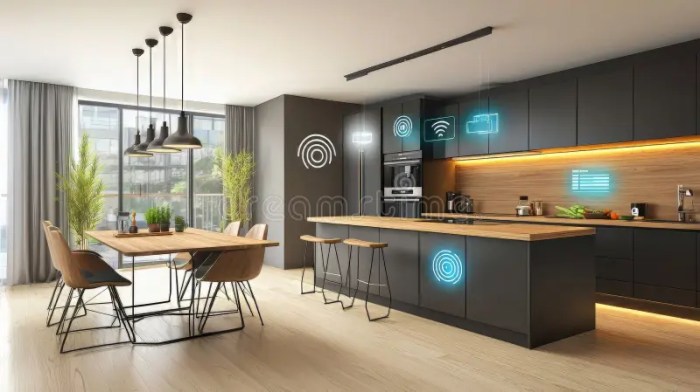
Smart kitchen design with IoT integration revolutionizes traditional kitchens by incorporating Internet of Things technology to enhance convenience, efficiency, and energy savings. IoT devices in smart kitchens are interconnected through a network, allowing for seamless communication and automation.
Examples of IoT Devices in Smart Kitchens
- Smart Refrigerators: Equipped with cameras and sensors to monitor food inventory, expiration dates, and suggest recipes based on available ingredients.
- Smart Ovens: Controlled remotely via smartphone apps, offering precise temperature control and cooking notifications.
- Smart Coffee Makers: Brew coffee on demand through voice commands or smartphone apps, ensuring a fresh cup every time.
- Smart Thermostats: Regulate kitchen temperature based on cooking activities and preferences, optimizing energy usage.
Benefits of Integrating IoT in Kitchen Design
- Convenience: IoT devices automate tasks, such as grocery list management and cooking control, simplifying daily routines.
- Efficiency: Smart kitchen appliances save time and effort by streamlining cooking processes and optimizing resource usage.
- Energy Savings: IoT technology enables energy-efficient practices, reducing utility costs and environmental impact.
IoT Devices for Smart Kitchens
When it comes to creating a smart kitchen, integrating IoT devices plays a crucial role in enhancing functionality and convenience. These devices are designed to communicate with each other and with users to streamline daily kitchen tasks and improve overall efficiency.
Smart Refrigerators
Smart refrigerators are equipped with features such as touchscreen displays, cameras inside the fridge, and the ability to connect to your smartphone. Brands like Samsung, LG, and GE offer smart refrigerators that allow you to see what's inside your fridge from anywhere, create shopping lists, and even suggest recipes based on the ingredients you have.
Smart Ovens
Smart ovens are designed to make cooking easier and more precise. They can be controlled remotely via smartphone apps, have built-in recipe databases, and some models even have cameras inside to monitor your food as it cooks. Brands like Bosch, Whirlpool, and KitchenAid offer smart ovens that cater to different cooking preferences.
Smart Lighting
Smart lighting systems in the kitchen can adjust brightness levels, colors, and even be voice-controlled for hands-free operation. Brands like Philips Hue, Lutron, and Sengled offer smart lighting solutions that can create the perfect ambiance for cooking, dining, or entertaining in your kitchen.Overall, these IoT devices work together through Wi-Fi or Bluetooth connectivity to provide a seamless user experience in the kitchen.
They can be controlled individually or integrated into a centralized smart home system for added convenience. By leveraging the power of IoT technology, smart kitchens are transforming the way we cook, eat, and interact with our living spaces.
Design Principles for Smart Kitchens
Creating a smart kitchen with IoT integration requires careful consideration of design principles to optimize space, layout, and functionality. IoT technology not only enhances the aesthetics but also improves the overall functionality of a modern kitchen design.
Optimizing Space, Layout, and Functionality
When designing a smart kitchen, it is essential to optimize space, layout, and functionality to ensure efficiency and convenience. Consider the following tips:
- Utilize vertical space by installing cabinets and shelves to maximize storage.
- Design an efficient workflow by arranging appliances, sink, and countertop in a triangle layout for easy access.
- Incorporate smart storage solutions such as pull-out drawers, lazy Susans, and pantry organizers to keep the kitchen organized.
- Choose multifunctional appliances and gadgets to save space and increase functionality.
Influence of IoT on Aesthetics and Functionality
IoT technology plays a significant role in enhancing the aesthetics and functionality of a modern kitchen design. Here are some ways IoT influences smart kitchen design:
- Smart appliances like refrigerators, ovens, and coffee makers can be controlled remotely via smartphone apps, adding convenience and efficiency to daily tasks.
- IoT-enabled lighting systems can adjust brightness and color temperature based on the time of day or user preferences, creating a comfortable and inviting ambiance.
- Integrating voice-controlled assistants like Amazon Alexa or Google Home allows hands-free operation of appliances and tasks, making cooking and meal preparation more convenient.
- Connected sensors can monitor food inventory, expiration dates, and suggest recipes based on available ingredients, reducing food waste and simplifying meal planning.
Security and Privacy Concerns in Smart Kitchens
In a smart kitchen environment where IoT devices are integrated, there are several security and privacy concerns that users need to be aware of to protect their data and ensure a safe cooking experience.
Potential Security Risks Associated with IoT Devices in Smart Kitchens
- Unauthorized Access: Hackers may exploit vulnerabilities in IoT devices to gain access to the kitchen network and even control appliances remotely.
- Data Breaches: Sensitive information such as cooking habits, recipes, and personal data may be at risk if proper security measures are not in place.
- Device Malfunction: Malware or software bugs could lead to devices malfunctioning, causing safety hazards in the kitchen.
Measures and Best Practices to Secure IoT Devices and Data in a Smart Kitchen Environment
- Update Firmware Regularly: Ensure that all IoT devices have the latest firmware updates to patch any known security vulnerabilities.
- Use Strong Passwords: Set unique and complex passwords for each device and change them periodically to prevent unauthorized access.
- Network Segmentation: Separate the kitchen IoT devices on a different network to minimize the impact of a potential breach.
- Enable Encryption: Encrypt data transmissions between devices and the cloud to protect sensitive information from being intercepted.
Protecting Privacy While Enjoying the Benefits of a Connected Kitchen
- Review Privacy Policies: Understand how your data is collected, stored, and shared by the IoT devices in your smart kitchen.
- Limit Data Sharing: Disable unnecessary data-sharing features and only provide information that is essential for the device to function.
- Physical Security: Ensure that physical access to IoT devices is restricted to prevent tampering or unauthorized use.
Closing Notes
In conclusion, the fusion of smart kitchen design with IoT integration holds the key to a future where our kitchens are not just functional spaces but intelligent hubs of connectivity and efficiency. Explore the endless possibilities that await in this exciting era of culinary innovation.
FAQ Compilation
How do IoT devices enhance convenience in a smart kitchen?
IoT devices in a smart kitchen can automate tasks, provide real-time updates, and offer remote control capabilities, making cooking and food management more convenient.
What are some security risks associated with IoT devices in smart kitchens?
Security risks include data breaches, unauthorized access to devices, and potential hacking vulnerabilities. Implementing strong passwords and regular software updates can mitigate these risks.
How can users optimize space in a smart kitchen design?
Users can optimize space by incorporating multifunctional furniture, utilizing vertical storage solutions, and decluttering regularly to maintain an efficient and organized kitchen layout.

